Let me take you back a bit. I was once under the charming notion that the world of golf only encompassed frisbees. My reality was soon shaken when a brand-new disc golf course appeared right at my workplace.
Eager to dive into this new adventure, my colleagues and I decided to test out our skills on the green. And I didn’t know the first thing about disc golf discs vs frisbees.
Imagine my surprise when I arrived with my regular frisbees, only to find I’d missed the memo on disc golf discs! But every cloud has a silver lining, and my blunder led me down a path of discovery.
Distinguishing Between Disc Golf Discs and Frisbees
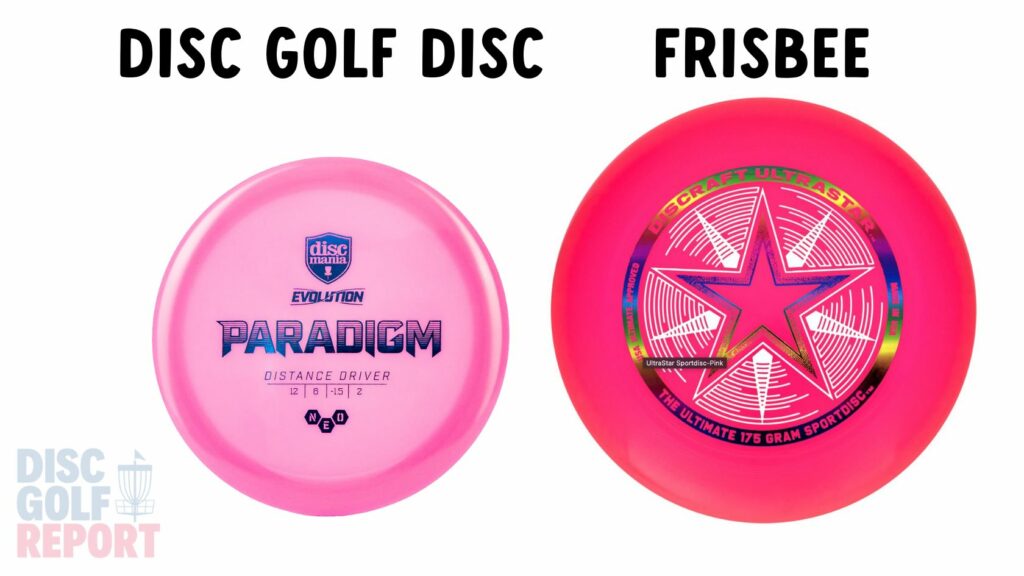
You might wonder, “What’s the big difference?” Well, there’s more to it than meets the eye. While disc golf discs are compact yet dense, frisbees have a rounder design optimized for casual throws and catches. My initial game, though played with a traditional frisbee, was an eye-opener. Those wielding disc golf discs had a clear edge in terms of both distance and accuracy.
Read Next: The Best Disc Golf YouTube Channels
A Closer Examination: Disc Golf Discs vs. Frisbees
- Terminological Twists: It’s intriguing how “frisbee,” a term trademarked by Wham-O, has become the go-to name for any flying disc. While some still fondly call it “frisbee golf,” it’s key to recognize the distinction as disc golf burgeons from a casual pastime to an established sport.
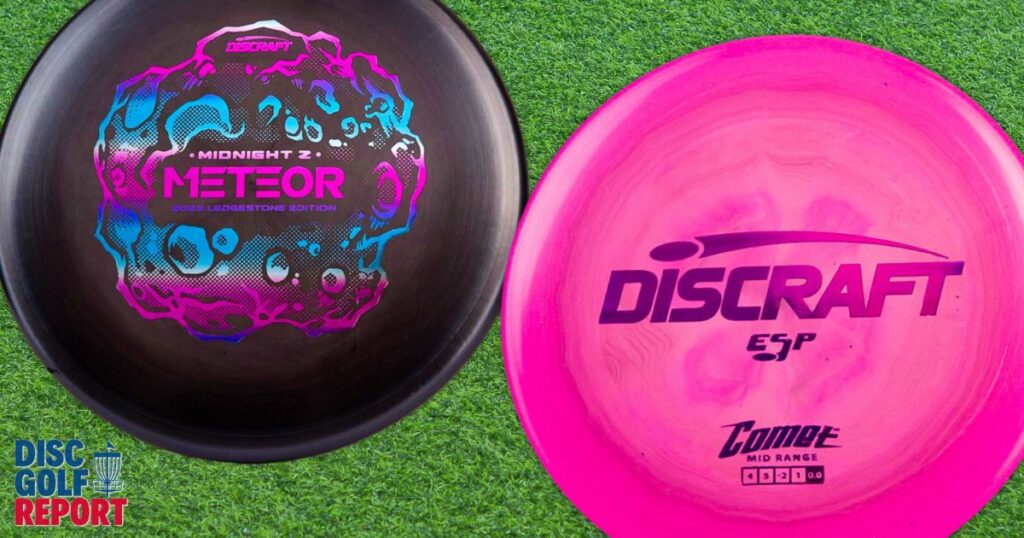
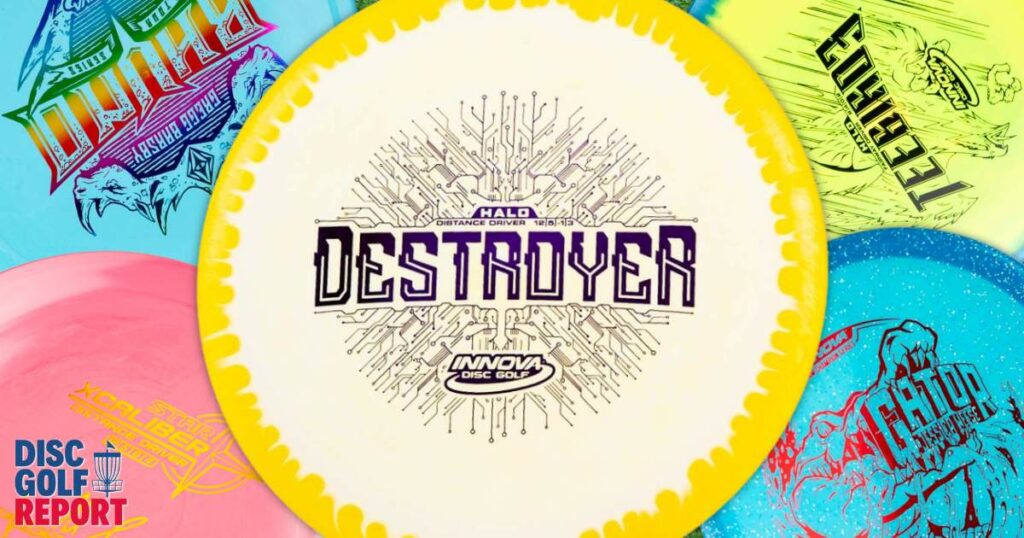
- The Evolution of the Game: As more people embrace disc golf, equipment innovation isn’t far behind. Modern-day golf discs are a far cry from the frisbees of yesteryears. Companies like Discraft and Innova are constantly pushing the envelope in the sport. Check out these Innova disc golf drivers!
Zooming into Technical Specifications
- Comparing Sizes: While golf discs are generally smaller in size, they comply with the 21.2 cm standard set by the PDGA. Frisbees, in contrast, come in varied sizes, each catering to its specific use case.
- Delving into Materials and Weight: Here’s a fun fact – golf discs are made from a pliable plastic that’s easier to grip, especially when you’re aiming for that long shot. Even though frisbees and golf discs might weigh roughly the same (think of the 175-gram frisbees in Ultimate games), golf discs feel heftier due to their dense composition.
- Throwing Distances and Techniques: Let’s talk technique. Transitioning from casually tossing a frisbee to launching a golf disc is akin to the difference between mini golf and its traditional counterpart. While anyone can send a frisbee a short distance away, golf discs, with their potential for extensive ranges, require finesse and practice.
Taking the Plunge: Frisbee or Golf Disc for Your First Game?
Well, here’s the good news. Starting with a regular frisbee isn’t just acceptable; it’s a fantastic way to get a feel for the game. For those dipping their toes into the world of disc golf, a frisbee offers a cost-effective and challenging beginning. And when the passion kicks in, upgrading to specialized golf discs and shoes can elevate your game to Simon Lizotte levels 😉
Pro Tip: Companies like MVP Discs have started making hybrid disc golf discs that feel somewhat similar to the flight of a frisbee. Check out the MVP Glitch or MVP Watt if you want to break into the sport smoothly!
Your First Steps in Disc Golf
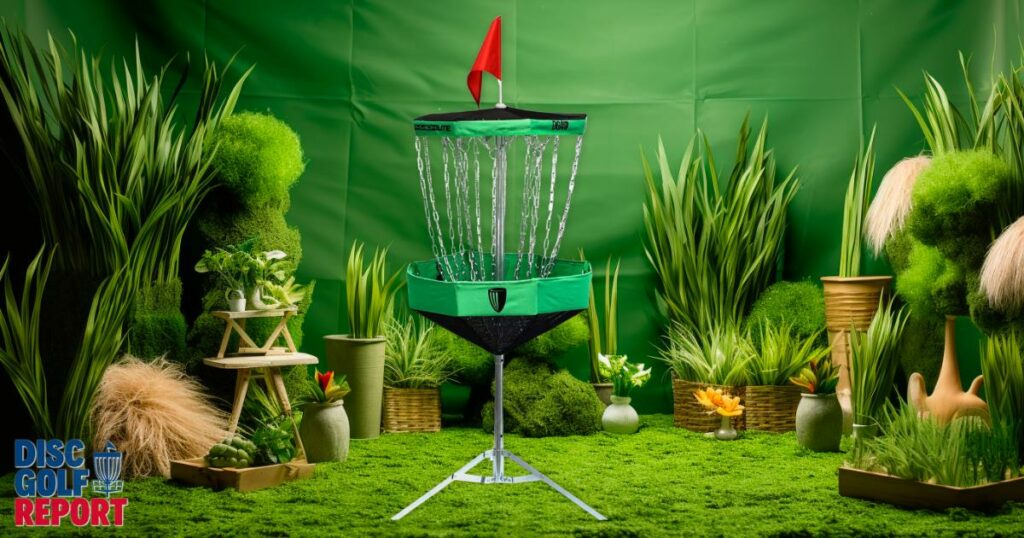
At its heart, disc golf is about navigating a course aiming to sink your disc in an elevated basket in the least throws. From lush parks in the U.S. to scenic courses worldwide, you’ll find plenty of spots to try your hand, many without costing a dime. Starting with a frisbee is entirely okay, but once the bug bites, a dedicated disc golf set will undoubtedly be on your wishlist.
And who knows, you could start earning some big disc golf prize money!
From casual frisbee throws in the backyard to the exhilarating world of disc golf, there’s a journey awaiting every enthusiast. As you embark on this sportive adventure, equipped with knowledge and enthusiasm, there’s only one thing left to say: Happy throwing, and may the course be ever in your favor!
Check out my disc golf retriever review or my disc golf bag review if you are still bored!